

Relic
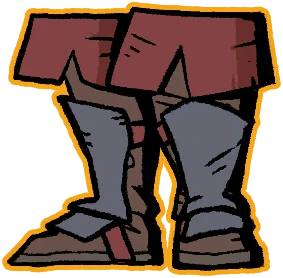
Strength Greaves
Legendary · Updated for patch 1.0.479
Quick answer
PICK IT WHEN
Take it when survival or consistency is the reason the run ends. The survival, safe signals describe the kind of problem it is meant to solve.
WATCH OUT
Do not spend a damage slot on it when the run is already safe and a core engine pick is available.
Editorial read: what this entry is trying to do
Strength Greaves is not a universal upgrade. Its recorded identity is survival, safe, and that combination tells you what kind of problem the entry is meant to solve. Start with the current effect, then check whether your run is already producing the event that gives the entry value.
This page treats the current planner record as a decision aid, not as a promise of a fixed ranking. The entry is listed as cross-checked; the effect record currently reads: “• Max Health +220%.” That wording matters because a rarity label can stay the same while the route around it changes after a patch. The practical question is whether Strength Greavesimproves the run you have, at the moment you can actually take it.
What the recorded effect means in a run
A relic is a slot decision. It can be powerful and still be wrong when its trigger is not part of the current route or when another slot fixes a more immediate failure.
survival entries buy time for the route to work, which makes them valuable when the run is losing before its damage plan comes online safe entries trade some ceiling for consistency, so they should be judged by the failed-run problem they remove
The current connections point to the trigger it is explicitly connected to. It is also connected to the current Hunter routes do not assign this entry to one named Hunter. Those connections are clues, not automatic instructions: a skill can be listed for a Hunter and still be the wrong answer when that run has a different immediate bottleneck. Compare the entry with the other offers on screen before spending the slot.
Early, middle, and late run decisions
Early run: prove the trigger
Early in a run, take Strength Greaves only when you can say what it will do in the next few rooms. Take it when survival or consistency is the reason the run ends. The survival, safe signals describe the kind of problem it is meant to solve. If the entry needs a second item, a particular element, or a later checkpoint, mark that dependency and keep a simple fallback in mind. An early pick is valuable when it starts a route or removes a failure that is already happening; it is fragile when it asks the run to become something entirely different.
Middle run: check whether the route paid back
In the middle of the run, stop judging Strength Greaves by the promise of its text. Look for the event it was supposed to improve: more useful shots, more controlled rooms, a cleaner boss window, or a safer route through the next checkpoint. If that event is not showing up, the correct move can be to keep the item as a placeholder while changing a support slot, or to pivot before the run spends another choice on the same idea.
Late run: protect the win condition
Late in the run, Strength Greaves should have a job that can be named in one sentence. Keep it if it contributes to the trigger it is explicitly connected to and the effect is still active in the actual loadout. Replace or ignore it when the route has already solved that problem and a missing survival, reload, or target-coverage answer is now more likely to end the run.
Boss, crowd, and fallback use
For bosses, ask whether the entry improves sustained access to the target or only creates a brief high roll. For crowds, ask whether it reduces the number of dangerous enemies that remain after one action. Strength Greaves has no explicit boss-or-crowd label in the current record, so use the trigger and effect text to decide where it belongs.
If Strength Greaves does not appear, use a replacement that preserves the same job rather than chasing the exact name. Related entries include Thunder Armor, Unbreakable Bulwark, A defensive or recovery relic, Coagulation Armor. A lower-ceiling option that keeps the element, trigger, or survival plan intact is usually a better fallback than an unrelated rare drop. Do not spend a damage slot on it when the run is already safe and a core engine pick is available.
How to test this pick without inventing DPS
- Write down the current Hunter, weapon, active tags, and the reason the run is considering Strength Greaves. Do not change several slots at once; otherwise the result cannot tell you what helped.
- Open the Planner with Strength Greaves selected and read the synergy explanation. Confirm that the entry is connected to a real trigger, not only to a shared word in the tag list.
- Test one crowded room and one durable target when the route reaches them. Record uptime, missed triggers, reload gaps, and the moment the run becomes safer or more fragile. A single run is an observation, not a universal damage measurement.
- Reopen this page after the next patch and compare the current effect with the recorded one. If the tooltip changes, downgrade the advice until the interaction has been checked again.
Limitations and the next decision
The planner does not claim a measured DPS ranking for Strength Greaves. It explains route fit from the current effect, tags, element, Hunter links, and evidence label. That is deliberately narrower than saying the item is always best. The useful output is a reasoned next choice that you can verify in the run.
If this entry fits, load it into the Planner and compare the next skill, relic, and Tarot choice. If it does not fit, return to the item library, filter by the missing trigger, and choose a replacement that fixes the failure you can actually see. That loop is more reliable than copying a static tier list without checking the run state.
Current effect text
• Max Health +220%.
What this entry connects to
Need to see the interaction in a full loadout? The Planner scores the tags and element together, then flags conflicts instead of pretending it has measured DPS.
Test this decision in the Planner →Related picks
This entry is part of the English planner database. Effects and labels are checked against the current patch baseline; if the game text changes, use the new tooltip and revisit the route. See how the sources are used.