



DECISION LAYER
Make the reserve buy power before it becomes a vanity score.
Lanny's economy only matters when coins become a combat advantage. Build income first, spend deliberately, and pivot when the reserve is not paying for the current room.
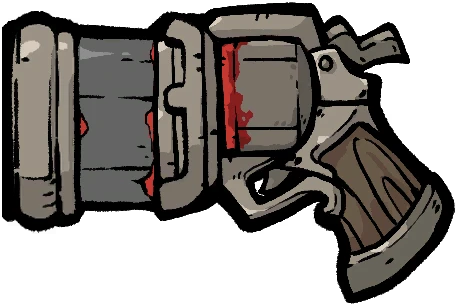
WEAPON DECISION
Recommended weapons, with a fallback
Use the first weapon as the route anchor. The other two are pivots for the run you actually get.
Why it fits. A reliable physical anchor that lets the economy build without demanding a rare gun.
Tradeoff. Reload downtime still needs support; coins do not replace a working firing loop.
Why it fits. A Fire fallback when the shop offers Fire support and the room needs wider pressure.
Tradeoff. Do not change element while the current relics are already paying for Physical.
Why it fits. A crowd-control option when a shop-rich run needs room safety.
Tradeoff. Its deliberate rhythm can be awkward if the economy route is already demanding attention.
RUN TIMELINE
Early, mid, and late choices
The right item changes as the run moves from establishing a loop to protecting a clear.
Build the income engine without losing the run.
Look for: Lanny's Piggy Bank, a stable weapon, and only safe economy upgrades.
Checkpoint: If you cannot clear the next room, stop investing in future coins.
Spend the reserve on a visible advantage.
Look for: Little Makes Mickle, Trading Expert or shop value, then reload or damage support.
Checkpoint: Every purchase should improve damage, survivability, or the next decision.
Convert economy into a finish.
Look for: Growth, reliable damage, and survival before another delayed payoff.
Checkpoint: A large coin count that never becomes combat power is a failed route, not a success state.
MATCHUP TEST
Boss damage and crowd clear are different jobs
Before a boss, spend enough to make the weapon and survival plan real. A reserve that stays unspent through the boss is not helping the run.
Use coins to buy room coverage and reload or frequency support. Lanny should not rely on a single-target payoff while packs are ending the run.
RNG RECOVERY
What to do when the core item is missing
Income is weak or the shop does not produce a meaningful advantage.
Stop scaling coins and take reliable weapon, reload, frequency, or survival value immediately.
Do not spend the whole reserve chasing one rare item while the current room is already unstable.
KEEP MOVING
Turn the advice into the next decision
Search the exact item, compare its trigger, then load this route into the Planner. The goal is a useful next pick, not a perfect shopping list.
Lanny's economy is useful only when the reserve buys a visible combat advantage. Build income, spend it on the current bottleneck, and switch to survival or direct damage when the wallet is not helping the next room.
The economy has to buy something
Lanny's trap is easy to describe: a growing wallet feels like progress even when the run is losing fights. The correct loop has three parts. Earn coins, spend them on an upgrade that strengthens the current weapon or survival line, then keep enough reserve for the next shop or emergency choice. If the second step never happens, the economy has become a score rather than a build.
That makes Lanny a strong teaching route for opportunity cost. Every economy pickup occupies a slot that could have been damage, reload, or defense. Take the coin engine when it changes what you can buy; pass on it when the next boss is already the immediate problem.
Working skill order
- Lanny's Piggy Bank: establish the income loop before paying for more ambitious growth.
- Little Makes Mickle: compound small gains only when the run can survive the setup period.
- Sustainable Operation: keep the economy from collapsing into a single lucky purchase.
Use this order as a starting point, not a rule that overrides the room in front of you. A direct survival skill can jump ahead of the second economy pick. The pool below is rendered from the same data used by the Planner.
| Skill | Current route note |
|---|---|
| Lanny's Piggy Bank | Builds the coin reserve. |
| Little Makes Mickle | Compounds small gains. |
| Sustainable Operation | Keeps the economy loop stable. |
| All or Nothing | Lanny's signature gamble window: for several seconds your final damage doubles while incoming damage also spikes sharply. As a build anchor it defines a burst archetype — everything else in his tree either extends, safens or further loads this window, so take it expecting to invest more picks into it. |
| Big Winner | Converts each [Trading Expert] trigger into an exclusive forge-anywhere relic whose shatter payout permanently stacks [Ember], [Growth] and [Armor]. For build planning this makes repeated trading a long-term stat snowball rather than a one-off shopping trip — strongest in coin-rich runs that trigger trading often. |
| Buy Safety | Repeatable death insurance funded by your wallet, with the price doubling per use. Unlike the once-per-run alternative it can save you multiple times, but it quietly competes with [Trading Expert] for the same coins — a rich economy build carries it easily, a spend-everything build weakens it. |
Weapon choice
Use a weapon you can operate consistently. Vintage Musket is a reasonable anchor because its firing pattern is easy to read and it leaves room for the economy to do work. A slower weapon with a larger paper number is not automatically better if it stops the run from clearing ordinary rooms.
Choose the element that your early relics already support. Physical feeds Hemorrhage, Frost feeds Freeze, Lightning feeds Disruption, Acid feeds Corrosion, and Fire feeds Ignition. Lanny benefits from a stable element because the economy is already asking the run to spend attention elsewhere.
Where to spend the lead
Spend first on the bottleneck that is causing lost rooms. If the gun is waiting on reloads, buy uptime. If bosses live too long, buy a direct damage channel. If the run is taking unavoidable hits, buy survival. Only buy another economy piece when the current reserve can already turn that piece into a concrete advantage.
War Horn is a useful Embarkation direction when the run already values permanent growth. Magician's Hat is the cleaner support when reload downtime is what keeps the shop purchases from mattering. The Empress can make dismantling more attractive, but it is only valuable when items are actually flowing through the dismantle loop.
Three signs to stop scaling
- The next boss is close and your current damage cannot clear the room safely. Buy power or defense now.
- You have a reserve but no meaningful shop purchase available. Save the slot for an effect that fixes the run instead of padding the wallet.
- Your economy is growing while your health is shrinking. A dead wallet has no value, however impressive the number looks.
Lanny's fallback is a generalist weapon route with one economy engine and a real defensive line. If the run never offers the second half of the plan, do not keep collecting growth tags out of loyalty to the original blueprint.
Open the Lanny route in the planner
Version note
Shop prices, return rules, and economy interactions can change with the patch. Check the current in-game text before committing to a coin-first route, then use the Planner to compare the fallback with a direct damage option. See the source notes for the data behind this page.